

The Malaysia-Indonesia Collaboration at SPENEX 2026 in Strengthening Family Therapy for Nusantara
By: Ruziana Masiran1
1Consultant Psychiatrist,Department of Psychiatry, Faculty of Medicine and Health Sciences/Hospital Sultan Abdul Aziz Shah, Universiti Putra Malaysia, Serdang, Selangor, Malaysia
| Event: | Special Education & Neuropsychiatry Exhibition (SPENEX 2026) |
| Date: | 17–19 July 2026 |
| Venue: | Four Points by Sheraton, Bekasi, Indonesia |
| Organiser: | Talenta Center, in collaboration with the Indonesian Psychiatric Association (PDSKJI), Indonesia |
| Theme: | From Couples to Generations: The Neuroscience of Family Resilience - Love, Parenting, Spirituality, and Brain |
| Website: | linktr.ee/Spenex2026 |
| Workshop: | Multigenerational Approach to Couple Therapy |
| Facilitators: | Associate Professor Dr Ruziana Masiran, Mr Darrel Devan Lourdes |
| Moderators: | Dr Frilya Rachma Putri Child & Adolescent Psychiatrist, Faculty of Medicine, Universitas Brawijaya, Malang, East Java. |
Background of the Program
SPENEX 2026 (“SPENEX 6”), hosted by Talenta Center in Bekasi, Indonesia, brought together psychiatrists, psychologists, educators and allied mental health professionals from across the region from 17–19 July 2026 under the theme “From Couples to Generations: The Neuroscience of Family Resilience.” The program built on the Malaysia-Indonesia family therapy partnership first reported at SPENEX 2025 (IACAPAP Bulletin 79, Sep 2025).
Continuing the training partnership and extending a locally adapted systemic model into the Indonesian context have drawn Malaysian and Indonesian psychiatrists and other mental health practitioners together for this session.
Program Objectives
- To extend multigenerational family therapy principles, adapted for Nusantara families, into new clinical settings.
- To deepen integration of Family-of-Origin (FOO) work into clinical practice with children and adolescents.
- To build live-supervision/co-therapy skills through experiential, case-based learning.
- To strengthen a cross-border Malaysia-Indonesia community of practice in family therapy through training, supervision, and joint publication.
Participants and Stakeholders
Approximately 40 participants attended the workshop, comprising teachers, counsellors, psychologists, psychiatrists and other mental health professionals, reflecting the interdisciplinary reach of SPENEX 2026 across Indonesia’s education and mental health sectors. The wider conference was formally opened by representatives spanning clinical, professional-body and government stakeholders, including the Ministry of Health’s Directorate of Health Services for Vulnerable Groups, underscoring the cross-sector nature of the collaboration.
Program Format and Content
The workshop unfolded across two connected days. On 17 July, Mr Darrel Devan Lourdes conducted a live family therapy session with a family of a child who had earlier presented with self-harming behaviour, and had persistently refused to attend school. The session was professionally recorded so that it could later serve as authentic teaching material. On 18 July, the recording anchored an in-depth teaching workshop co-led by Mr Lourdes and Associate Professor Dr Ruziana Masiran, in which participants examined the therapist’s interventions, clinical reasoning and case formulation. Rather than treating the presenting symptoms as an isolated individual pathology, participants were guided to understand the child’s distress within the emotional system of the wider family, following Professor Maurizio Andolfi’s multigenerational model. Structured dialogue and reflective discussion traced how the presenting self-harm had acquired new relational meaning once linked to longstanding marital tension between the parents. Facilitators used this material to bridge theory to practice, adapting the multigenerational lens to Nusantara family structures by highlighting the role of extended kin, generational expectations, and a therapist positioning that remained respectful of local family hierarchies while still opening space for the child’s voice to be heard.
Impact and Alignment with IACAPAP Vision
This collaboration reflects IACAPAP's call for cross-national training, collaborative clinical practice, and culturally responsive service development in child and adolescent mental health. Its impact can be seen in:
- Participants gained practical experience in systemic case formulation, learning to read an adolescent’s depressive and self-harming presentation as embedded in family relational patterns rather than as an isolated individual pathology.
- Facilitators guided participants in applying Andolfi’s multigenerational framework within the relational and communal structures typical of Nusantara families, drawing attention to the influence of extended kin and generational expectations on parent-child dynamics, while modelling a therapist positioning that remained respectful of local family hierarchies.
- Feedback from participants pointed to a marked shift in clinical thinking, moving from asking what was wrong with the child to asking what had happened within the family’s relationships to give the child’s distress its meaning - a reframing that emerged through active discussion between Malaysian facilitators and Indonesian mental health professionals.
- Many participants expressed strong interest in further professional development in multigenerational family therapy, signalling appetite for continued joint training between Malaysian and Indonesian practitioners beyond this single workshop.
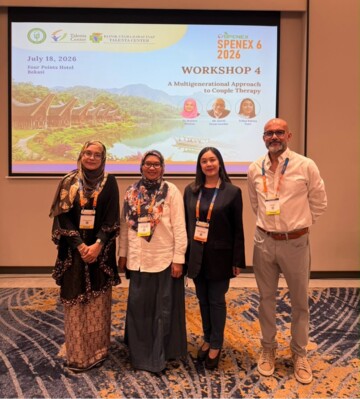
Figure 1: Associate Professor Dr Ruziana Masiran and Mr Darrel Devan Lourdes and Dr Suzy Yusnadewi and Dr Frilya Rachma Putri who represented members of the SPENEX 2026 organising committee.
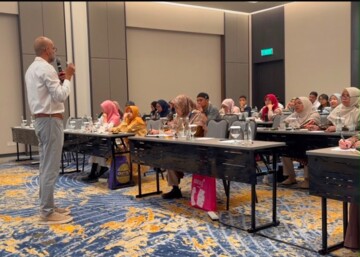
Figure 2: Mr Darrel conducting the family therapy workshop.
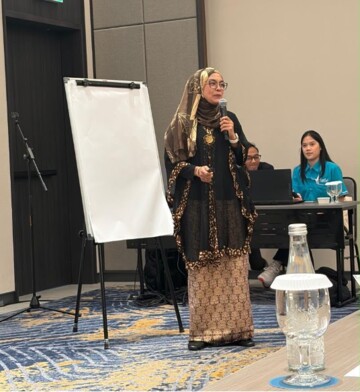
Figure 3: Dr Ruziana conducting the family therapy workshop.
Institutional Vision and Future Directions
This return invitation to SPENEX, following on directly from the partnership’s debut at SPENEX 2025, reflects the shared commitment of Universiti Putra Malaysia and the Andolfi Family Therapy Centre to extending systemic, relationally-informed family therapy training across the region. Building on the momentum generated over these two consecutive years, the facilitators hope to formalise the collaboration into a sustained cross-border pathway of training and supervision. These include further joint workshops, and a future certification program, working toward a regional community of practice in family therapy that remains grounded in Nusantara family values.
Acknowledgements
We extend our sincere appreciation to:
- Talenta Center and the Indonesian Psychiatric Association (PDSKJI) for organising and hosting SPENEX 2026;
- drg. Yaya Aria Santosa, MARS, PhD (Chair, Yayasan Bina Talenta), dr. Agung Frijanto, Sp.KJ, Subsp. RSP(K), M.H. (Chair, PP-PDSKJI), and dr. Imran Pambudi, M.P.H. (Director of Health Services for Vulnerable Groups, Indonesian Ministry of Health), for their opening remarks and support of the event;
- Dr. dr. Suzy Yusna Dewi, Sp.KJ, Subsp.A.R.(K), MARS, Chair of the Indonesian Association of Child and Adolescent Mental Health (PERKESWARI), and founder and head psychiatrist of Klinik Talenta Center for her continued spirit of collaboration;
- Universiti Putra Malaysia and the Andolfi Family Therapy Centre for co-developing the workshop content;
- The family who generously consented to the live, recorded therapy session and made this teaching opportunity possible;
- All participating teachers, counsellors, psychologists, psychiatrists and mental health practitioners for their active engagement throughout the workshop.
Conclusion
SPENEX 2026 showed how a relationally grounded, multigenerational approach to family therapy can be meaningfully applied within Indonesian and wider Nusantara contexts, deepening the bridge between theory and practice that began with the Malaysia-Indonesia collaboration at SPENEX 2025. By anchoring clinical teaching in a real, recorded case, the workshop helped participants move beyond individual pathology toward a relational understanding of children's distress, work consistent with IACAPAP's vision for culturally responsive, cross-national training in child and adolescent mental health. As this partnership continues to grow, it holds promise for building a sustainable regional community of practice that serves the wellbeing of families and children across Malaysia and Indonesia.
Conflict of interest: None declared.
This article represents the view of its author and does not necessarily represent the view of the IACAPAP's Bureau or Executive Committee.
