

Gamification of Learning: A Collaborative International Quiz at the IACAPAP 2026 World Congress
By: Farshid Monshizadeh Tehrani1, Emine Nural Ozturk2, Andreea Daniela Zaharie3, İrem Aktar-Songür4, Hend Jemli5, Achudhan Karunaharamoorthy6, Dicle Buyuktaskin4
1Child and Adolescent Mental Health Services Clinic – Holbæk, Zealand University Hospital, Holbæk, Denmark
2Asklepios Fachklinikum Lübben, Lübben, Germany
3Professor Doctor Alexandru Obregia, Bucharest, Romania
4Department of Child and Adolescent Psychiatry, Gazi University School of Medicine, Ankara, Türkiye
5Department of Psychiatry, Razi Hospital, Tunis, Tunisia
6Outpatient Clinic for Child and Adolescent Psychiatry and Psychotherapy, Clienia Littenheid AG, Winterthur, Switzerland
During the IACAPAP World Congress in Hamburg (1–4 July 2026), the IACAPAP Early Career Group (ECG) and the European Federation of Psychiatric Trainees (EFPT) Child and Adolescent Psychiatry (CAP) Working Group jointly organised an interactive quiz session. The aim was to explore a new approach to medical education and to demonstrate how gamification can create an engaging and collaborative learning experience for students, trainees, and professionals.
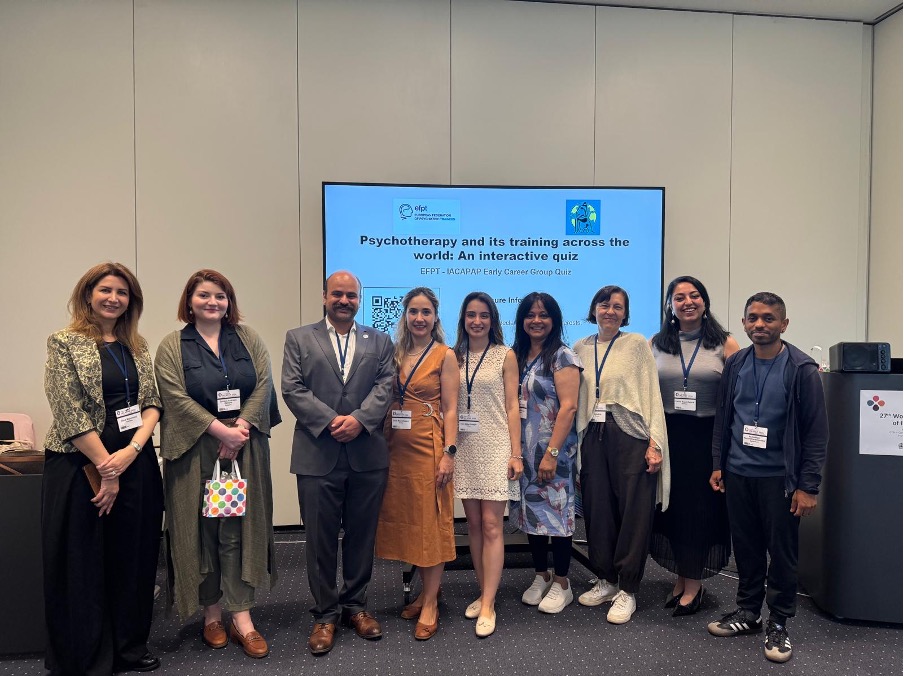
Figure 1: The organizing team for the Quiz at the IACAPAP World Congress, together with the volunteer participants from audience.
The theme of the quiz centred on psychotherapy in CAP. While the concept was initially inspired by a quiz session designed by the Early Career Psychiatrists (ECP) section of the World Psychiatric Association (WPA), it was developed into a unique format specifically tailored to international CAP congresses. Rather than fostering competition, the session focused on game-based learning to stimulate curiosity, encourage active participation, promote early ownership, and facilitate intercultural and intergenerational discussion.
The structure of the session is intentionally multigenerational. A wide range of professionals, from junior trainees and medical students to professors, participate as contestants, while senior residents and early career specialists design and facilitate the quiz. Experienced clinicians and academics may join as experts to ensure the quality of the content and contribute to enrichment of the discussion with clinical reflections. Importantly, by actively involving the international audience, the quiz provides a platform for intercultural dialogue and shared learning.
The session consisted of multiple rounds, each featuring distinct stages to promote different aspects of learning. The first stage focused on factual knowledge through rapid-fire multiple-choice questions. This stage aimed to assess knowledge while highlighting the value of reflection and team discussions rather than impulsive responses in moments of uncertainty. By encouraging to answer only when confident, the quiz reinforced one fundamental principle of good clinical practice: knowing when to pause, reflect, or seek advice from colleagues, valuing professional restraint.
The second stage focused on cultural perspectives. Contestants were asked to guess the top five top responses to opinion-based surveys that had been presented to the audience prior to the session. This stage encouraged participants to consider how perspectives can differ across countries, cultures, and healthcare systems. Subsequently, the audience was invited to discuss their choices, which proved very valuable as both audience members and experts reflected on why certain responses varied internationally. These stimulated conversations extended well beyond the quiz itself, sparking broader topics on cultural influences, psychotherapy training pathways, and differing approaches to CAP around the world.
Adding a touch of friendly rivalry to the experience, the teams were split into two lively groups: the Butterflies and the Superheroes. While the Superheroes secured the win this time, the true victory belonged to everyone present, as the shared learning and laughter made every participant a winner. Ultimately, all contestants received the same gifts at the conclusion of the quiz, reinforcing the core message of the session that participation, curiosity, and willingness to learn far outweigh the importance of winning.
The organisers envision this initiative will continue as a joint educational project between the IACAPAP ECG and the EFPT CAP Working Group. By combining interactive learning, international collaboration, and early career leadership, this model has the potential to strengthen educational partnerships, inspire future generations of professionals, and promote global shared learning.
Conflict of interest: None declared.
This article represents the view of its authors and does not necessarily represent the view of the IACAPAP's Bureau or Executive Committee.
