

Creating Pathways to Early Identification and Support for Children with Developmental Language Disorder (DLD) in Middle-Income Countries: Lessons from Georgia
By: Maia Gabunia¹, Tamara Kalandadze²
¹Georgian Association of Children Mental Health, Tbilisi, Georgia
²Østfold University of Applied Sciences, Norway
Developmental Language Disorder (DLD) is one of the most common neurodevelopmental conditions, affecting approximately 7.6% of children worldwide. Beyond its impact on language and communication, DLD is associated with increased risks of emotional, social, and behavioural difficulties, including anxiety, depression, low self-esteem, peer problems, and social exclusion. DLD therefore represents an important mental health and equity concern. Despite its prevalence and consequences, many children with DLD remain unidentified worldwide, resulting in delayed access to support. While challenges in identifying and supporting children with DLD exist across countries, they are often amplified in settings with limited resources, research, training, and service infrastructure. One such country is Georgia.
In 2025, Georgian researchers and clinicians affiliated with the Georgian Association of Child and Adolescent Mental Health (GACMH), Maia Gabunia (MD, PhD), Tamar Chochishvili (SLT, MA), Mariam Meburishvili (SLT, MA), and Salome Tchkonia (SLT, MA), initiated two complementary projects aimed at improving the identification and support of children with DLD in Georgia. The projects are led by Tamara Kalandadze (PhD) (Østfold University of Applied Sciences, Norway) and supported by implementation scientist Rouzana Komesidou (Mosinian Research and Consultancy, Cyprus). The first project, Where Do We Start? A Roadmap to Identify, Assess, and Support Children with Developmental Language Disorder in Low- and Middle-Income Countries (START), was funded by the IDLDRC Developmental Language Disorder Research Grant 2024 (Australia). The second project, Identifying Developmental Language Disorder (DLD) in Georgian-Speaking Children (DILA), was funded by the Shota Rustaveli National Science Foundation of Georgia. The initiative brought together a multidisciplinary team of Georgian Speech and Language Therapists (SLTs), mental health professionals, and researchers, in collaboration with international partners from the United Kingdom and the United States.
The projects constitute the first systematic effort to examine how children with language and communication difficulties are identified and supported within the Georgian healthcare and education systems. Using principles of Implementation Science and the Consolidated Framework for Implementation Research (CFIR) (Damschroder et al., 2009; Reardon et al., 2025), we explored barriers and facilitators affecting the identification and support of children with DLD and documented current SLT practices through interviews and focus groups with SLTs, paediatricians, child neurologists, and child psychiatrists.
Importantly, this work is also among the first efforts to systematically apply implementation science in DLD research. Implementation Science helps us to understand how evidence-based practices can be successfully implemented within real-world health and education systems. By focusing on contextual factors, interest holder perspectives, and implementation processes, our work aims to bridge the gap between research evidence and everyday practice.
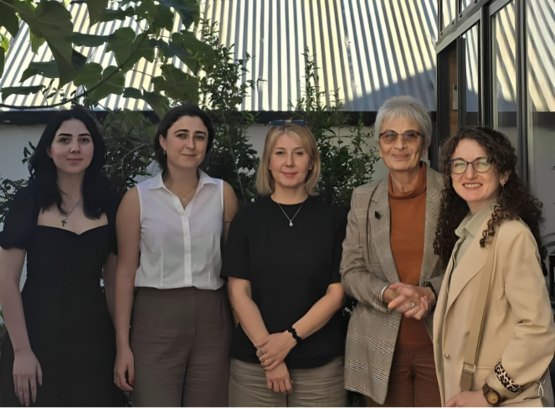
Figure 1. Georgian team (left to right): Salome Tchkonia, Mariam Meburishvili, Tamar Kalandadze, Maia Gabunia, and Tamar Chochishvili.
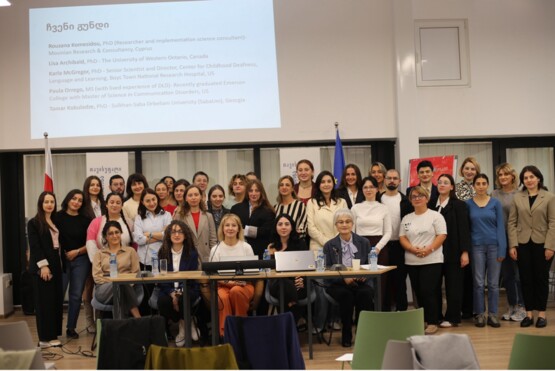
Figure 2. After the meeting with Georgian SLTs.
Our findings suggest that barriers and facilitators are deeply interconnected, and many of the barriers and facilitators identified in Georgia are not unique to middle-income countries. Challenges such as limited awareness of DLD, insufficient professional training, fragmented service pathways, lack of assessment tools, and gaps in policy recognition have been reported across diverse health and education systems worldwide. Likewise, factors supporting successful implementation, including interprofessional collaboration, interest holder engagement, family involvement, and leadership support, appear relevant across cultural and economic contexts. These findings suggest that many of the conditions influencing the identification and support of children with DLD are universal, making lessons learned in Georgia relevant across low-, middle-, and high-income settings.
Based on our findings, we developed two tools: the DLD Context Assessment Tool (DLD-CAT), which helps teams identify factors that may facilitate or hinder the implementation of evidence-based practices aimed at the timely identification and support of children with DLD, and the Pragmatic Checklist for Identifying Minimum Conditions to Support Children at Risk of DLD in Speech and Language Therapy Practice (PRISM-DLD), which helps evaluate whether SLT services meet minimum conditions for evidence-based care. We also developed an illustrated fact sheet to support awareness-raising among professionals, families, and communities. These resources are freely available at: https://osf.io/pnfz7/overview.
Building on these outputs, we developed a roadmap intended to help researchers, practitioners, service leaders, and policy-makers strengthen systems for DLD identification and intervention. Although developed in the Georgian context, the roadmap was designed with broader applicability in mind and can be adapted to local needs, priorities, and available resources.
The next phase of our work focuses on developing and piloting a brief screening questionnaire for the early identification of children at risk of DLD. In collaboration with kindergarten teachers, we plan to screen preschool children aged 4 to 6 years.
Our experience demonstrates that meaningful progress is possible even in contexts where research infrastructure and specialist services are still developing. By bringing together researchers, clinicians, educators, families, policy-makers, and international partners, it is possible to create pathways that improve children's communication, participation, educational opportunities, and mental health. We hope that the lessons from Georgia, together with the practical resources developed through this project, will encourage similar initiatives worldwide and foster new collaborations dedicated to improving outcomes for children with DLD.
Finally, we view the DLD-CAT and PRISM-DLD as living resources that can continue to evolve through international collaboration. We warmly invite researchers, clinicians, professional organizations, and implementation teams interested in DLD to collaborate with us in translating, adapting, piloting, and evaluating these resources in additional languages and contexts.
Conflict of interest: The authors declare no conflicts of interest related to this project.
References:
- Damschroder, L. J., Aron, D. C., Keith, R. E., Kirsh, S. R., Alexander, J. A., & Lowery, J. C. (2009). Fostering implementation of health services research findings into practice: a consolidated framework for advancing implementation science. Implementation science : IS, 4, 50. https://doi.org/10.1186/1748-5908-4-50
- Reardon, C. M., Damschroder, L. J., Ashcraft, L. E., Kerins, C., Bachrach, R. L., Nevedal, A. L., Domlyn, A. M., Dodge, J., Chinman, M., & Rogal, S. (2025). The Consolidated Framework for Implementation Research (CFIR) User Guide: a five-step guide for conducting implementation research using the framework. Implementation Science: IS, 20(1), 39. https://doi.org/10.1186/s13012-025-01450-7
This article represents the view of its author(s) and does not necessarily represent the view of the IACAPAP's Bureau or Executive Committee.
