

Celebrating the Legacy of Dr. Myron Belfer: A Life Dedicated to Children’s Mental Health Around the World
By: Hesham Hamoda1
1Boston Children’s Hospital, United States
Some careers are measured by positions held and accomplishments achieved. Others are measured by the people they inspire and the doors they open for those who follow. Dr. Myron Belfer’s career belongs firmly in the latter category.
On Thursday, July 16, 2026 colleagues, friends, trainees, and members of the Boston Children’s Hospital community gathered to celebrate an extraordinary career as a portrait of Dr. Myron Belfer was unveiled alongside those of former Department of Psychiatry chairs Drs. David DeMaso and William Beardslee.
The portrait recognizes Myron’s leadership at Boston Children’s Hospital, but the legacy it represents extends far beyond the walls of the institution. For more than four decades, Myron has championed the mental health of children and adolescents across countries and continents, while mentoring generations of professionals who have carried that vision into their own communities.
His career is, in many ways, a reflection of what global child and adolescent mental health can achieve when clinical expertise is combined with curiosity, partnership, persistence, and a deep commitment to developing others.
Following his medical and psychiatric training, Myron served in the U.S. Public Health Service, an experience that helped launch the international relationships and commitments that would become a defining thread throughout his professional life. At Boston Children’s Hospital, he held numerous clinical, educational, and leadership roles, including leadership of consultation-liaison and emergency psychiatric services and ultimately serving as Psychiatrist-in-Chief.
Yet perhaps Myron’s most distinctive contribution has been his ability to see child and adolescent mental health as a global enterprise. Beginning in the 1990s, he increasingly devoted his energy to strengthening mental health systems and developing the workforce needed to care for children and young people around the world.
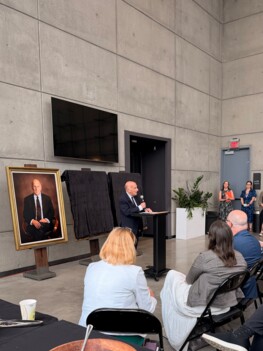
Figure 1: Dr. Myron Belfer speaking at the ceremony
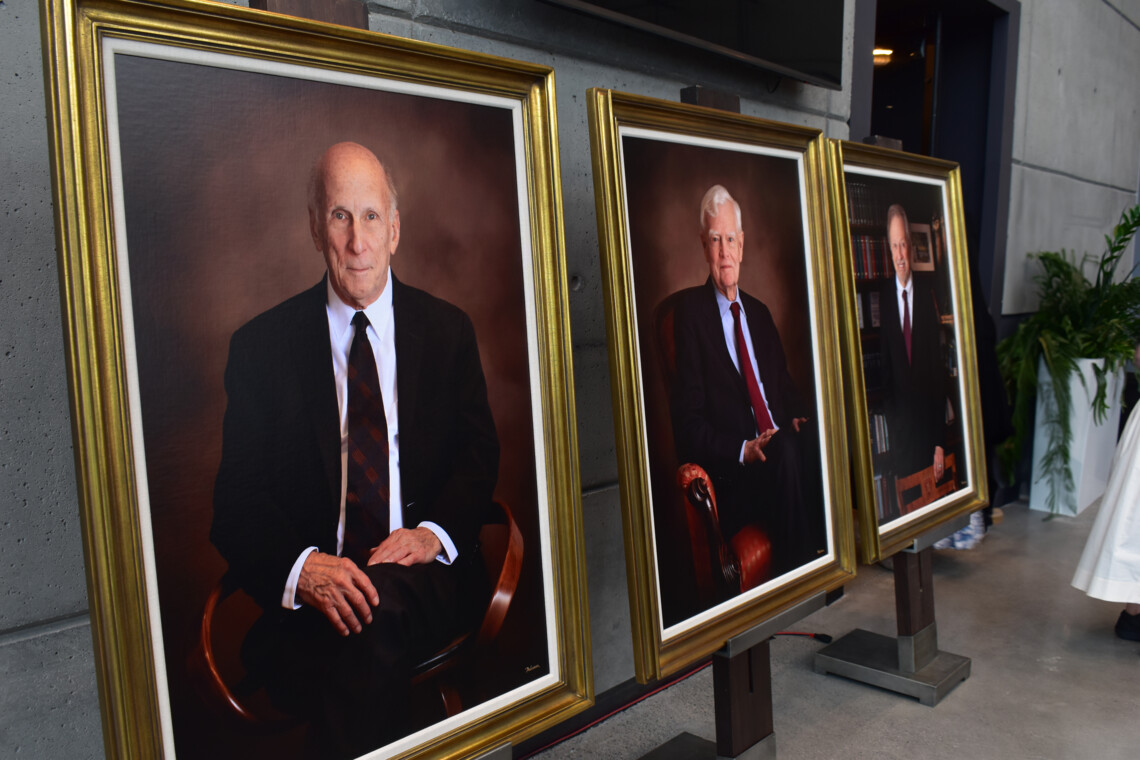
Figure 2: Portraits from left to right: Dr. Myron Belfer, Dr. William Beardslee and Dr. David DeMaso
His work with the World Health Organization was particularly influential. As WHO Senior Advisor for Child and Adolescent Mental Health in Geneva, he played a central role in the development of the landmark 2005 ATLAS: Child and Adolescent Mental Health Resources. By documenting the profound disparities in services, policies, and resources across countries, the publication helped draw international attention to the urgent need to strengthen child and adolescent mental health systems. Myron also contributed to WHO initiatives addressing disaster response, stigma, mental health policy, and service development, supporting efforts across multiple regions of the world.
His commitment to international collaboration has been equally evident through IACAPAP. Myron served as IACAPAP Treasurer from 1992 to 2004 and President from 2004 to 2006. He was subsequently named an Honorary President and, in 2010, received the IACAPAP International Contribution Award for Lifetime Achievement. These honors reflect not only his leadership within the organization but also the extraordinary breadth of his contributions to our field.
Myron’s influence has never been confined to international meetings, publications, or policy initiatives. He has consistently invested in people. His work in capacity building and education has taken him to China, India, Nigeria, Kosovo, Bulgaria, and many other countries. In Nigeria, he played an important role in establishing a master's-level child and adolescent mental health training program at the University of Ibadan. The program has gone on to train more than 100 professionals from 14 African countries, a powerful example of how sustainable workforce development can multiply the impact of a single initiative.
For many of us at Boston Children’s Hospital, though, Myron’s most enduring legacy is mentorship.
He has an extraordinary ability to recognize potential in others and to open doors. Generations of trainees and faculty have been introduced through him to the possibilities of global mental health, international collaboration, and service beyond one’s own institution or country. He has encouraged colleagues to teach, learn, conduct research, build partnerships, and, perhaps most importantly, believe that they can contribute to improving the lives of children and families far beyond their immediate surroundings.
This commitment to mentorship also helped lay the groundwork for Boston Children’s growing engagement in global child mental health. The Global Child Mental Health Observership Program, established with Dr. Patricia Ibeziako in 2009, brought professionals from around the world to Boston to learn from and contribute to the clinical and educational life of the department. The Belfer International Child Mental Health Lecture, established in 2007, similarly created an enduring forum for bringing international perspectives and expertise to Boston Children’s trainees and faculty.
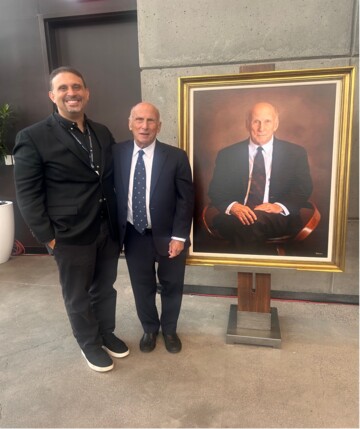
Figure 3: Drs. Hesham Hamoda and Myron Belfer
I have personally been fortunate to experience Myron’s generosity as a mentor and friend. Like so many others, I have benefited from his encouragement, wisdom, and willingness to create opportunities for the next generation. His influence is often felt not only through what he has accomplished himself, but through what he has enabled others to accomplish.
Myron has sometimes described his own career as the product of “chance and wonderful mentorship from others.” There is humility in that description, but it also captures something fundamental about his philosophy. He understands that careers, and fields, are built through relationships, opportunity, generosity, and a willingness to invest in those who come next.
Over the course of his career, Myron has done precisely that. Through clinical care, scholarship, international policy, advocacy, education, capacity building, and mentorship, he has helped advance child and adolescent mental health across the globe. More importantly, he has helped create a community of professionals committed to carrying that work forward.
The full measure of such a career cannot easily be captured in titles, publications, awards, or the number of countries in which one has worked. Its true impact can be seen in the people who were inspired, the programs that were created, the partnerships that endured, and the generations of professionals who continue to carry forward the values they learned from him.
The portrait unveiled at Boston Children’s Hospital is therefore more than a recognition of a former departmental leader. It is a tribute to a global citizen, mentor, advocate, and champion for children and adolescents everywhere.
IACAPAP is fortunate to count Dr. Myron Belfer among its Honorary Presidents and enduring leaders. For the many colleagues and trainees whose lives he has touched, it is an even greater privilege to call him a mentor, colleague, and friend.
Acknowledgment: Dr. Hamoda is grateful to Dr. DeMaso for generously sharing his remarks, which provided important context and perspective in preparing this article
This article represents the view of its author and does not necessarily represent the view of the IACAPAP's Bureau or Executive Committee.
