

An Interview with IACAPAP International Contribution Award 2026 Winners
By: Dr. Rajesh Mehta1
1Child and Adolescent psychiatrist, Children’s Hospital of The King’s Daughters, Norfolk, Virginia, United States
The IACAPAP International Contribution Award is sponsored by the Korean Academy of Child and Adolescent Psychiatry (KACAP) and is presented by IACAPAP to recognize the accomplishments of a senior individual who has made outstanding contributions to child and adolescent mental health (CAMH) in the developing world. The award underscores the contributions of the individual to services development, research and/or teaching in Low or Middle-Income countries.
The winners of the International Contribution Award 2026 is:
- Prof. Helmut Remschmidt, Professor Emeritus of Child and Adolescent Psychiatry, Philipps University of Marburg, Germany
- Mr. Andreas C. Dracopoulos, Co-President of the Stavros Niarchos Foundation (SNF)
Interview with Prof. Helmut Remschmidt
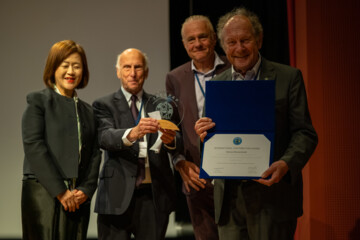
Figure 1: Picture taken at the 27th World Congress of the IACAPAP in Hamburg, Germany - Dr Hee Jeong Yoo, Prof Myron Belfer, Prof Luis Rohde and Prof Helmut Remschmidt (from left to right).
1. Can you share some of the key highlights of your career in child and adolescent mental health, including any defining moments or experiences that shaped your path?
Prof. Remschmidt:
My interest in child and adolescent psychiatry began early in my medical career. One particularly important experience was caring for a young girl with epilepsy, which stimulated my interest in understanding the psychiatric and developmental needs of children.
A major turning point came when, at the age of 35, I was invited to establish the new Chair of Child Psychiatry and Child Neurology at the Freie Universität Berlin. There was very little infrastructure in place, so I had the opportunity and challenge of building a program essentially from the ground up. To learn from the best models, I traveled extensively throughout Europe, the United States, and Canada, visiting leading centers and meeting many of the people who were shaping child psychiatry internationally.
These international experiences became a defining feature of my career. I later continued my academic work in Marburg, combining clinical care, research, teaching, and international collaboration. My scientific interests have included developmental psychopathology, schizophrenia, psychiatric genetics, eating disorders, forensic psychiatry, and treatment and evaluation research.
What I value most, however, is not simply an individual scientific accomplishment but the opportunity to contribute to the development of child and adolescent psychiatry and, particularly, to the development of younger colleagues.
2. What advice would you give to early-career mental health professionals who are looking to make meaningful contributions to the field?
Prof. Remschmidt:
First, never lose sight of the individual patient. Research, diagnostic instruments, rating scales, and evidence-based guidelines are extremely important, but they should not replace seeing the child or adolescent as a whole person—with an individual personality, family, developmental history, and social environment. This remains one of the principles I consider most important in our field.
Second, develop a broad perspective. Travel if you have the opportunity, meet colleagues from other countries, and learn how child mental health care is practiced in different cultural and health-care systems. Some of the most formative experiences of my own career came from visiting centers internationally and developing relationships with colleagues around the world.
Third, become involved in research and learn to evaluate evidence critically. One reason I have invested so much effort in research seminars has been to give young scientists the opportunity to present their work, receive critical feedback from experienced researchers, and establish international networks.
Finally, seek good mentors—and later become a mentor yourself. A career is not built entirely through individual achievement. It develops through relationships, collaboration, intellectual curiosity, and a willingness to create opportunities for those who follow you.
That philosophy continues to be reflected in IACAPAP today: the Helmut Remschmidt Research Seminars are specifically designed as a research-capacity-building program for early-career child and adolescent mental health researchers.
3. How has mentorship played a role in your professional growth, and what qualities do you think make a great mentor?
Prof. Remschmidt:
Mentorship has been extremely important throughout my professional life, but I would think about mentorship broadly. Different people have played different roles at different stages of my career.
James Anthony was particularly important because he recruited me into IACAPAP. Albert Solnit subsequently encouraged me to stand for President of IACAPAP. Lionel Hersov was a fatherly adviser to me for many years.
There were many other relationships that shaped my international career. Colette Chiland was our leader on my first trip to China in 1984. Donald Cohen became a dear friend, and we traveled together to many countries. Our friendship was particularly meaningful to me, and after his death I wanted to preserve his memory through the Donald Cohen Fellowship Program.
Irving Philips helped secure for me the honor of being named an International Scholar of the American Psychiatric Association. Salvador Celia and I were connected through many activities in Brazil. Kari Schleimer, the historian of IACAPAP, together with Per-Anders Rydelius, organized the 14th IACAPAP World Congress in Sweden. Per-Anders later worked with me on numerous research seminars around the world.
Barry Nurcombe was an important connection with Australia and a remarkable scholar. He visited us in Marburg on three occasions.
These experiences taught me that a good mentor does more than teach. A mentor recognizes potential, opens doors, introduces young people to new ideas and new colleagues, gives constructive criticism, and sometimes encourages them to take opportunities they might not have pursued on their own.
For me, there is also a responsibility to pass that mentorship to the next generation. That principle became central to both the research seminars and the Donald Cohen Fellowship Program.
4. How has IACAPAP influenced your career?
Prof. Remschmidt:
IACAPAP has been an extraordinary part of my professional life. It provided not simply an organizational affiliation, but an international professional community.
James Anthony brought me into IACAPAP, and Albert Solnit encouraged me to seek its presidency. Through IACAPAP I developed friendships and collaborations across Europe, North America, South America, Asia, Australia, and many other parts of the world.
During my leadership, I was particularly interested in initiatives that could have a lasting impact beyond an individual presidency.
One of the initiatives of which I am most proud is the Donald Cohen Fellowship Program. which I was able to launch at the 16th IACAPAP World Congress in Berlin in 2004. It was created in memory of my dear friend Donald Cohen and to provide opportunities for promising young professionals from around the world. IACAPAP's historical record confirms that the program has continued regularly in association with its World Congresses.
Another major initiative was the development of the research seminars. Their origins go back to research seminars that Martin Schmidt and I began in Germany in 1983. They subsequently developed into European research seminars and then into an international program. They became known as the Helmut Remschmidt Research Seminars, with the international seminars beginning in the IACAPAP era.
I also provided scientific leadership for the WPA Global Program on Child Mental Health from 2002 to 2005, working in collaboration with WHO and IACAPAP.
I am particularly pleased that these were not temporary projects. They became sustainable programs that continued to develop younger generations of clinicians and researchers.
That legacy is still very visible. The 10th Helmut Remschmidt Research Seminar was held in Kloster Irsee, Germany, in September 2025, with 23 fellows from 17 countries, and I was pleased to attend in person. The Donald J. Cohen Fellowship also remains one of IACAPAP's core early-career programs; IACAPAP reported receiving 280 applications for the fellowship associated with the 2026 cycle.
Seeing programs that began many years ago continue to bring together young professionals from around the world is perhaps one of the most rewarding aspects of my association with IACAPAP.
5. Looking ahead, what do you believe are the most pressing challenges or exciting opportunities in child and adolescent mental health globally?
Prof. Remschmidt:
One of our continuing challenges is ensuring that child and adolescent mental health receive appropriate attention in medical education and health systems throughout the world. Children and adolescents represent the future, yet specialist resources and training remain very unevenly distributed internationally.
We must continue to strengthen evidence-based practice and research. At the same time, we should be careful that our increasing ability to measure symptoms does not lead us away from the individual patient. We need both scientific rigor and a deep understanding of the individual child and family.
Psychotherapy and therapeutic skills should also remain an important component of training. Child psychiatrists should not only diagnose and prescribe; they need to understand development, relationships, families, and the psychological experience of the young person.
Another major opportunity is international collaboration and capacity building, particularly for young professionals and for colleagues working in countries where resources for child and adolescent mental health remain limited. International organizations can connect people who otherwise might never have an opportunity to learn from one another.
IACAPAP's current work demonstrates that this need remains very relevant. Its recent programs emphasize education in regions with limited specialist training, multidisciplinary collaboration, open-access educational resources, and continued support for the Donald J. Cohen Fellowship and Helmut Remschmidt Research Seminars.
Ultimately, the future of our field depends on the next generation. We need to provide young clinicians and scientists with good training, strong mentorship, opportunities to conduct meaningful research, and international relationships. If we can do that while continuing to see each child as an individual person rather than simply a diagnosis or a score, I think child and adolescent mental health has a very promising future.
Interview with Mr. Andreas C. Dracopoulos
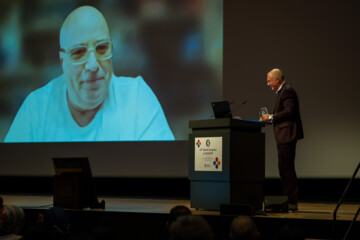
Figure 2: Picture taken at the 27th World Congress of the IACAPAP in Hamburg, Germany – Andreas C. Dracopoulos and Prof Luis Rohde (from left to right).
1. Reflecting on Your Journey: Can you share some of the key highlights of your career in child and adolescent mental health, including any defining moments or experiences that shaped your path?
Mr. Dracopoulos:
At the Stavros Niarchos Foundation (SNF), we are a philanthropic organization committed to supporting initiatives that improve lives around the world. Our grantmaking is organized around four main pillars: Education, Arts & Culture, Social Welfare, and Health & Sports. We have been supporting mental health work under our Health pillar since our inception in 1996. Then in 2001, we made our first grant to the NYU Child Study Center, where we were fortunate to meet Dr. Harold Koplewicz. Dr. Koplewicz has been a close collaborator of SNF’s ever since, as is his team at the Child Mind Institute.
Fast forward to 2020, we saw stigma around mental health start to be reduced during the pandemic, and the needs were apparent. In response, we doubled down on our dedication to supporting mental health as part of our Global Health Initiative (GHI) through grants to various projects around the world, all aiming to address numerous aspects of the crisis. This includes the creation of the SNF Global Center for Child & Adolescent Mental Health at the Child Mind Institute, which was based off of the Child & Adolescent Mental Health Initiative (CAMHI) in Greece, a public-private effort to strengthen systems throughout the country, also part of the GHI.
For three decades, we’ve had the privilege of partnering with many organizations that have dedicated their work to advancing child and adolescent mental health, and we are incredibly grateful for all of our partners working to make a difference in the lives of young people across the globe.
2. Advice for Early Career Professionals: What advice would you give to early-career mental health professionals who are looking to make meaningful contributions to the field?
Mr. Dracopoulos:
As I am not a mental health professional myself, the most important thing I can say to early-career professionals is: thank you. Thank you for choosing to dedicate your time and energy to this field. We are fortunate to have people like you working day in and day out to improve the lives of children around the world. We need you, and we appreciate you!
3. The Role of Mentorship: How has mentorship played a role in your professional growth, and what qualities do you think make a great mentor?
Mr. Dracopoulos:
Mentorship has played a pivotal role throughout my life. At the same time, I believe it’s even more important to remember that mentorship goes both ways. At SNF, we are proud of our longstanding internship program, which hosts interns throughout the year. I always remind our interns that we learn just as much from them as they do from us, and we encourage them to share their thoughts and ideas. In June we hosted SNF Nostos, a weeklong celebration of 30 years of SNF grantmaking, and we once again worked in partnership with our Youth Advisory Committee (YAC), a group of young people from four continents, all 25 and under, who helped shape the creation of the festival. We also worked with them on SNF’s 30 for 30: Next-Gen Grants initiative, handing the grantmaking reins to the YAC under the guidance of our colleagues at SNF, ensuring that young people are at the forefront of our work at SNF and playing an active role in our grantmaking. It’s all about giving the opportunity for our youngsters to take ownership, be part of the discussion and hopefully solutions, and understand the importance of responsibility and accountability that comes hand in hand with taking that ownership.
4. Future Directions: Looking ahead, what do you believe are the most pressing challenges or exciting opportunities in child and adolescent mental health globally?
Mr. Dracopoulos:
We need to focus on the immense challenges, and of course on the resulting opportunities, presented in trying to find solutions. The stigma coming off is just the beginning of a long road ahead. We now have a better understanding of what the problem is around the world, and it’s not only with young people. We need to focus on the issue of mental health at large, to collaborate on the ground, across borders, integrate young people in the discussions, and keep working to find solutions and “catch up” to a problem that has simply run away from us. And finally, we need to think of how we will support the mental health providers and caregivers in their training and education, and providing ongoing support for them too!
This article represents the view of its author and does not necessarily represent the view of the IACAPAP's Bureau or Executive Committee.
